
Earthquake Preparation
A short story

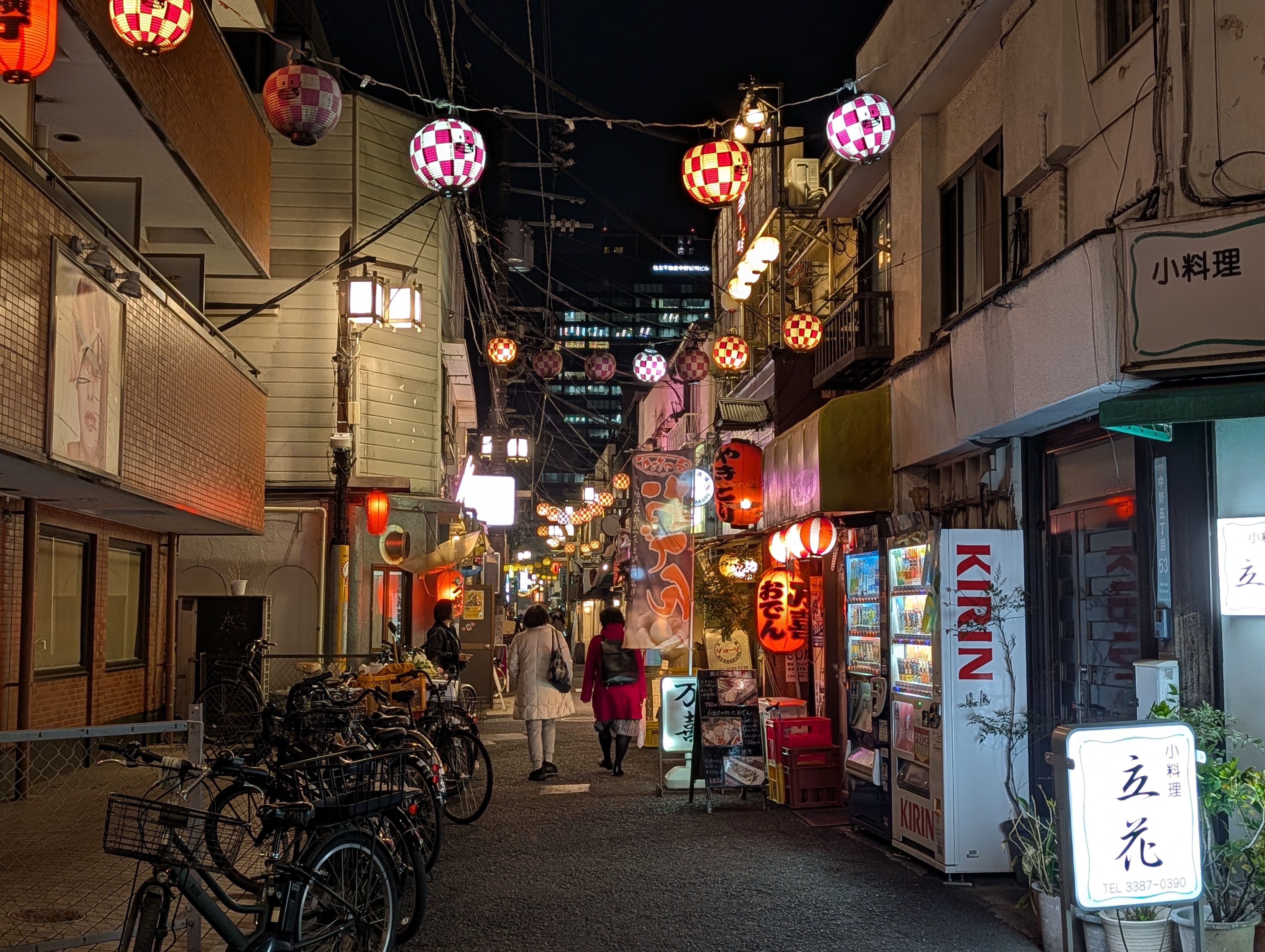
“You weren’t always this afraid of earthquakes, Ren-chan,” Sachiko said as she lifted the tea bag from her cup and placed it on the saucer on the dining room table. A faint steam cloud curled up from her cup.
Ren Ishi gave his wife a long, thoughtful look and took an equally long sip of his tea before answering. “I’ve always been concerned about earthquakes, even before the Great Tohoku earthquake—”
“That was fifteen years ago. The city and national government are much better prepared. We have sixty liters of water, plus food, emergency toilets, flashlights and batteries, fans, board games, everything we need to last ten days; that’s three days longer than the government says we need to prepare for. Really, seriously, a backup apartment is an unnecessary expense. We’ll never use it, never need it. Plus, there are also shelters if it comes to that.”
“I’m not going to a shelter where a thousand people share four toilets, where there’s bound to be at least a hundred people snoring in the same room all night long, where nobody’s going to shower, and it will smell like a sewer.” He brought his cup to his lips, and took a deliberate slurping sip.
“How do you even know it will be standing after a major earthquake? Even if we get a backup place, it might collapse, and it certainly won’t have electricity or water.”
“You’re right about no utilities, but we don’t need them. We need a backup apartment because we live on the forty-ninth floor. There’s no way for us to restock, to carry supplies up so many stairs. When we run out, it’s to the shelter we go. Or they find us dead from dehydration or starvation.”
“It’s not going to come to that because we have supplies.” Sachiko tapped her phone, a habit of hers when she wanted the conversation to end on her terms.
“An emergency apartment is like a lifeboat. Nobody ever thinks their ship will sink, but every vessel has a lifeboat; they’re vital. An emergency apartment is like an airplane’s locator device, another backup for when the worst happens. We can afford it, and we should get it.”
Sachiko countered Ren’s argument with silence.
“One other thing. Have you read that the probability of a major earthquake along the Nankai Trough is nearly one-hundred percent sometime in the next thirty years?”
Sachiko responded with more silence.
Ren continued to press his case.
Three days later, they signed the lease for their second apartment—their lifeboat apartment, as Ren called it. Within a week, he had stocked it with water, food, and other supplies.
Sachiko designed and decorated their ten-by-ten-meter space. “This is fun.”
Ren did not remind her that she had opposed the idea.
After completing the apartment, Sachiko suggested they rent a second lifeboat apartment. “A second backup increases our odds of having a safe and secure place for when the Nankai Trough earthquake happens.” Sachiko worked as a statistician at the Trick Toy Company in nearby Yokohama, so she spoke from experience.
“Or Mt. Fuji erupts.”
“Or a devastating typhoon strikes.”
“Or an earthquake-tsunami combination.”
“Or a landslide. Chances are high that one disaster or another will affect us soon,” Sachiko said.
They decorated their second backup apartment in washitsu style, but also outfitted it with two hundred liters of water, three five-thousand-watt-hour batteries, a solar panel, food for a month, and numerous other supplies. They admired their classically-stylish apartment with its wood-frame, paper-paneled doors, despite the contrast between traditional Japanese design and stark, utilitarian supplies. Or maybe they liked this apartment so much because of that aesthetic conflict.
“I think we need—” Ren and Sachiko said simultaneously that evening.
“You first,” Sachiko said.
“Okay. I think we need a third apartment for emergencies. It’s probable that neither of these two backups will be habitable in the aftermath of a great quake.”
“You should be a statistician, too,” Sachiko said. “I can’t disagree with that.”
They decorated their third backup in Modern Minimalist, and then their fourth in Wabi-Sabi, fifth in Japandi— a blended Japanese-Scandinavian design style—and from there they continued to rent and renovate more apartments until they rented 2,568 apartments scattered around the Tokyo-Yokohama-Kawasaki megalopolis, each with its own style.
“More lifeboat apartments means we’re safer,” Sachiko and Ren said in unison the night after they raised glasses of champagne to their completed project.
Sachiko built a GPS-linked database app for their phones so they’d always be able to find the nearest lifeboat apartment.
The sweet satisfaction of safety sated them.

Ren was half asleep in the dental chair having his teeth cleaned when the earthquake struck.
The hygienist dropped her tools.
Violent shaking pitched Ren out of the chair a second before the overhead light crashed onto it. He braced himself under a table for two minutes until the movement stopped, and then dashed into the street.
He tried to call Sachiko, but there was no signal. And no electricity anywhere. Street lights failed. Sirens screamed. In the distance, smoke billowed, a sign of an earthquake that stretched across a vast area.
Ren tapped his phone’s database to GPS-locate one of their nearby emergency apartments, which was a twenty-seven-minute walk away. Twenty-seven minutes on a normal day, but with streets littered with debris and with objects still falling from buildings, twenty-seven minutes might become twenty-seven hours.
He started walking.
Sachiko had just settled into her seat at a company meeting when her phone and a dozen other people’s phones blared with earthquake alarms.
Three seconds later, the building shook like a ship at sea caught in a sudden hurricane. Books leapt from the shelves, pens on the conference table shot across the room like arrows, and three people toppled over in their chairs.
“It’s the big one!”
“Everyone, evacuate the building,” Tsumugi Mori, the company’s president, instructed.
Sachiko bounded down twelve flights onto the street.
Two small, older buildings had already collapsed into brick and wood piles. A wide gash zig-zagged along the street, and somewhere at the edge of her hearing there was an explosion.
A gas explosion, Sachiko thought.
Her phone read, “No signal.” She wondered how long it would be until cell phones worked again. A long time. She tapped her phone and found her nearest emergency apartment two kilometers from her office in Roppongi.
What are the odds that we’d need one of our emergency apartments so soon after acquiring them all? she wondered, and then realized she didn’t have enough data about earthquakes to calculate that, despite her statistical bona fides.
She gasped. Oh no! I have no way to contact Ren, and the odds of us both finding the same apartment out of the 2,568 are 0.0405% per day. When will I see Ren again?
But she knew: Not for a long time. It will take 4.7 years for there to be even a fifty percent chance of us being in the same apartment on any given day.
Sachiko surveyed the ruined city around her.
All this preparation, but we never chose an apartment in which to meet.
If you appreciate my short stories, but a subscription doesn’t fit your budget, you can buy me a coffee instead. Thank you.
If you enjoyed this story, I think you’ll also like, The Day Ayame Makino Transformed into a Guitar.
The Day Ayame Makino Transformed into a Guitar

Ayame Makino thought about the day she transformed into a guitar.
When survival turns into a hobby and the hobby turns into an obsession. And in the middle of all that, the one thing that matters gets forgotten. They will meet if they are meant to.
Such a tragic ending! If only they had made that one important decision!