
Skinny Town
A short story

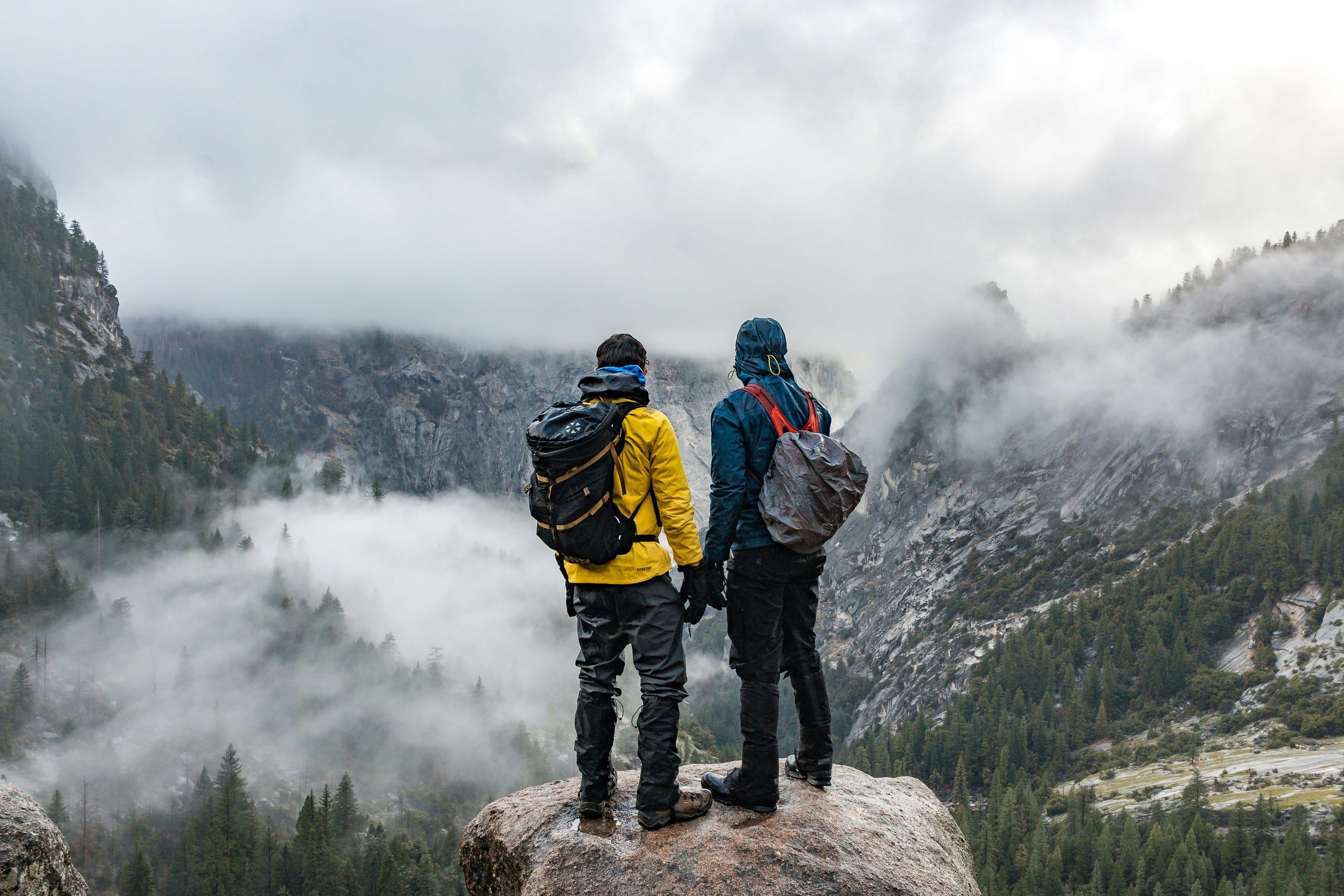
“We’re lost,” Adam said, his words punctuated by desperate gasps that burned his lungs as he plodded forward on weary legs. “We’re fucking lost. And once it gets dark, we’re doubly screwed. I don’t know why I thought it would be a good idea to go camping in Maine; we’re New York City boys and don’t know a single thing about the woods.”
“Let’s rest,” Louis suggested.
“No, we fucking can’t. We have to set up camp now and you know it, because in the dark we can’t tell if we’re walking over a cliff edge or into quicksand or something. And where we are right now,”—he waved his arm at the dense thicket of trees and then at the twigs, logs, and vegetation on the ground— “there’s no space for our tent.” And then he said, “If we even know how to set up a tent.” Under his breath, but still quite audibly, he added, “You and your stupid ideas. I told you we should have gone to Club Med.”
A shrill wind whistled through the trees, its pitch rising as it approached like a train at full throttle, then it lifted and spun leaves and pine cones into a vortex around the two hikers, threatening to grow and carry them into the sky as well.
As suddenly as the wind started, it stopped.
A woman with long, blonde hair, wearing a blue bikini, and carrying a basket of fruits and flowers emerged from behind a thicket. She didn’t have an ounce of fat on her body.
Adam looked at Louis and Louis at Adam, both aware that they were wearing multiple layers more of clothing than this woman.
Adam was about to ask, “Aren’t you cold?” but the woman spoke first, enquiring, “Are you lost?”
Adam nodded and Louis said, “Yes, I think we are, thanks to him.”
“Then follow me. Our village isn’t far. You can set your heavy packs down, enjoy a meal, and rest. I’m Lilly.”
Adam and Louis did as she suggested. They hiked for another forty-five minutes until they arrived at a clearing in which Lilly’s village stood.
The village consisted of twenty-two old-fashioned log cabins arranged in a circle around a cylindrical wooden structure, roughly forty feet tall and twenty feet in diameter, with no windows. It looked like a storage space.
Lilly escorted them on a tour of the village while two villagers grilled meat and roasted potatoes over a fire pit.
When the tour was over, Adam asked, “How do you have such a large town that’s not on the map? What is this place called? How is it in the middle of the forest?”
“Eat first and I’ll answer as many questions as I can after.”
Borborygmic rumblings cascaded through Louis’ and Adam’s stomachs as savory aromas of grilled chicken and beef wafted through the air. The smells mingled with Maine’s pine-scented air, transforming the atmosphere into an intoxicating haze.
Both the mid-thirties men smiled broadly.
Lilly waved to three other villagers, two men and one woman, all dressed in swimsuits like she was. And all skinny almost to the point of underfed, like Lilly, ribs framed under their skin. They carried woven baskets of fruits and greens, which they placed on a large, rustic picnic table outside one of the cabins.
A woman with short, black hair approached Adam and pinched the fleshy part of his arm, squeezing him between her thumb and forefinger.
Lilly shook her head and mouthed something.
The woman nodded and walked away.
Lilly rested platters of chicken, beef, pork, and potatoes—three different kinds of potatoes: roasted, mashed, and fried hash browns—where Louis and Adam now sat. In front of the no longer lost hikers was a pitcher of hot, mulled wine, which they drank as eagerly as they ate.
“Why are you not eating any meat or potatoes?” Adam asked Lilly. He scrunched his eyes, as if narrowing them would bring her answer—whatever it was going to be—into sharper focus.
She leaned over and kissed Adam’s cheek. “It’s a secret.”
“And all of you, how do you stay so thin? And why the bathing suits? Do you wear them all the time? Don’t you get cold?”
“We get chilly,” one of the men in tight, gray trunks said. “But we like it this way.”
“We do,” Lilly and the two others responded. “We like to show off how skinny we stay. It’s a matter of pride.”
“Like a competition?”
“I’d never thought about it that way, but yes, like a competition.”
Louis patted his rotund belly, anticipating it becoming even more corpulent, enjoying the feeling.
As they ate, other villagers, mostly young men and women—though some people in their fifties and possibly beyond—all in bathing suits, wandered by. They all occasionally glanced at the newcomers, smiled, and continued on their way.
Louis belched. “Well, thank you for making this for us. It’s truly delicious.”
“You’re welcome,” Lilly said.
They ate the rest of their food, finishing every bit of meat and potato and every drop of the mulled wine, and then Adam said, “I think we’re great. We’ll take off now.”
Louis nodded.
“That’s not a good idea. It will be dark soon. Your best bet is to sleep and then, in the morning, if you want to head out, you can.”
“If?” Adam asked.
“You might like it here,” Lilly winked. “You might want to stay.”
Lilly escorted Adam and Louis to one of the identical cabins that formed a circle about the central structure.
Both fell asleep nearly instantly and woke with the first morning bird melody. They packed their backpacks and stepped out of the cabin.
The sun had not yet risen above the treetops, but it was bright.
Lilly waved from the cabin next door and strode over to them. “Leaving?”
“We should.”
“Good luck.” She extended her hand.
Adam shook her hand and then Louis did, too. After that, they walked past the ring of cabins into the woods.
A minute later, they found themselves walking toward the cabin ring again.
“That’s odd,” Adam said. “Let’s try again, and this time I’ll use a compass to keep us heading straight.”
After another minute, they were back inside the village.
“Let’s try from a different point of departure.”
And again, they returned.
“Once more; this time we’ll make X marks on the tree trunks with a knife so we know where we’ve been,” Adam said.
“That’s not good for the trees.”
“Let’s just do it.”
After their sixth attempt, Lilly greeted them as they reentered the village. “Now you know,” she said. “You can’t leave. None of us can leave.”
“That’s not possible,” Adam said.
“Sorry, but it is.”
“You brought us here. Why? You trapped us here.”
“You were lost, just like I was lost once and like everyone who ended up in this village was once lost. If we didn’t take you in, you’d likely perish in the wilderness.”
“I see.” He shot Louis a glance that said, I don’t believe her.
“How does it work? What causes this?” Louis added.
“I don’t know. None of us know. We’re here, we’re safe, and not unhappy. Speaking of which, you must be hungry again after those entrances and exits.” She tugged on the thin, skin-hugging jean shorts she wore today. “We knew you’d be back and prepared a feast for you.”
And a feast it was. Louis devoured steak and pork chops, mashed potatoes and Brussels sprouts simmered in garlic butter, while Adam cautiously picked at the food, only eating a fraction of what the villagers served.
“Don’t you think we should eat what they eat?” Adam asked. “Berries and salad?”
Through a mouthful of food, Louis replied, “Nope,” and then he shoveled a forkful of mashed potatoes into his mouth. “It’s good.”
One of the men sitting at an adjacent picnic table, who was eating his veggies, gave Louis a big thumbs-up.
Over the next week, Adam coaxed Louis into trying ten more times to leave the village, which they dubbed Skinny Town because everyone was so thin. Everyone except for the two of them.
At the end of their tenth try, Louis plopped down on a bench, sighed, and said, “I give up. This isn’t working. What do you say we both quit trying to leave because it’s futile?”
Adam nodded and, in a voice that barely pushed any air, said, “Okay.”
Adam succumbed to gluttony, as his best friend had done since their first day. He perched his knife and fork above the colossal lasagna coated with a thick layer of ricotta cheese, took a deep breath, and cut and shoveled a large piece into his mouth. He talked with his mouth full. “I accept my fate, my friend. We’re here to stay.”
“Good. I mean not good that we’re stuck here, but good that you accept it because now you can enjoy the food like I do.”
When it rained, the villagers set up a tarp above the picnic tables. The villagers’ courtesy enriched their lives.
While toddling back from dinner under a dark shadow cast against a cabin by the first full moon since they had arrived, a wild animal approached them—not close, but too far for them to decipher its features.
A wolf, maybe a bear, Adam thought, definitely too big to be a fox, though he had never seen a fox or bear or wolf and so couldn’t say for certain.
It sniffed—a discordant sound—and then it dashed around another cabin and into the village center near the cylinder, where it disappeared.
A few weeks later, while they were walking back from lunch, two buttons popped off Louis’ plaid L.L. Bean shirt. The buttons flew over one of the cabins and pinged into the adjacent one, causing them both to laugh hysterically.
Adam expanded from a thirty-six-inch waist, and Louis added fifty pounds to his five-foot-ten-inch frame. They now waddled instead of walking from their cabin to the picnic table where they ate their meals.
Adam and Louis knew everyone’s name, and they enjoyed the villagers’ company.
Louis said, “I like Sherry. Do you think I should ask her out?”
“Out where?”
“I mean like on a date. We’re going to be here forever, so we should start thinking that way.”
“What way?”
“Love, marriage, boys and girls, whatever villagers do in that regard.”
Adam contorted his face into an exaggerated frown and mockingly wiped his eyes. “Are you leaving me, Louis?”
Louis elbowed him. “You’d better find somebody, too. You don’t want to be a forever bachelor.”
Once, Adam suggested they try a little exercise, maybe shed a pound or few. “Good for the heart.” They circled the village’s central cylinder several times, panting and dripping buckets of sweat despite the cool air, and they plodded in an endless circle, their feet striking the ground with elephants’ thuds.
Louis’ protruding belly threw him off balance and he slammed into the cylinder’s metal wall. A low-pitched growl, like an animal woken from the middle of its hibernation, came from inside.
As fast as they could, which was not fast at all, they walked back to their cabin.
Dinner comforted them, and by the time their gracious hosts presented their apple pie a la mode dessert, their attempted exercise was a faded memory.
They ate and ate and ate. The food delighted their taste buds.
Periodically, villagers poked Adam and Louis in the belly with their forefingers, with compliments like, “You’re doing well.” Women sometimes added, “I like big men.”
Adam and Louis enjoyed the attention. They especially enjoyed the food. If they were troubled by their inexplicable captivity in this strange and yet wondrous place, a piece of pie or cake instantly cured them of that anxiety.
On the morning of their sixtieth day, Adam and Louis struggled to get out of bed, their muscles ineffective against their weight and sluggish from the chilly October air.
Adam grunted and Louis groaned. Their hearts beat furiously and they gulped oxygen in a vain attempt to generate sufficient power to get out of bed.
As they were about to roll onto the floor, the door to their cabin squeaked open. Lilly, Sherry, and six others materialized in their room. They were still wearing bathing suits, even in the throes of autumn.
Before Adam and Louis had a chance to form words, the skinny invaders picked them up and carried them out the door.
Despite their weight and the vigorous thrashing, the villagers easily transported the two men out the door and toward the village center.
“What are you doing? Where are you taking us?” Louis screamed.
“What’s happening?” Adam shouted.
“Do you really want to know? I don’t think you want to know,” one of their captors said.
“No, you don’t. It’s better not to know.”
“I want to know,” Adam insisted. “Tell me!”
They stopped in front of the cylinder.
The cylinder growled.
No, Adam thought, not the cylinder. Something inside the cylinder.
A clang, loud and singular, followed by another.
The noise stung Adam’s ears and chilled his blood.
Adam tilted his head back, looking at the world upside down. Each time the cylinder clanged, a bump popped in the metal. Like—
Something’s inside, something alive. Something that—
“It’s time to feed you to Brammorg. You are finally fat enough to satiate Our Lord,” a fifty-or-so-year-old man with shoulder-length black hair and wire-frame glasses said. He was emaciated, and he was strong.
Adam and Louis struggled even harder, attempting to twist themselves free and failing.
“Even if you were able to escape, there’s nowhere for you to go. The harder you fight, the worse it will be for you. Your fate is inevitable. You are dinner,” Lilly said.
“Noooooooooo!”
“Wait, please.”
“No waiting.” She added, “Sometimes, they figure out what this place is all about and they eat only fruit and flowers as we do and become one of us. Frank wandered in last year and figured it out. Sherry the year before. Brammorg doesn’t eat skinny people. You can understand that.”
Louis sobbed.
From his inverted view, Adam noticed vents at the top of the cylinder for the first time.
“The thing we saw in the woods, that’s Brammorg?” Louis stammered. Broken, chopped syllables passed through his lips, his will to resist shattered.
A thick cloud blocked the sun.
“No. That was one of Brammorg’s babies. Brammorg is much bigger. And Brammorg hasn’t eaten in one hundred and two days.”
If you appreciate my short stories, but a subscription doesn’t fit your budget, you can buy me a coffee instead. Thank you.
If you enjoyed this story, I think you’ll also like The War.

You made appetite the cage. Nastier than the monster in the cylinder. Loved this one, Bill.
Thank you for introducing me to "Borborygmic rumblings" :-D