
The New Virus
A short story

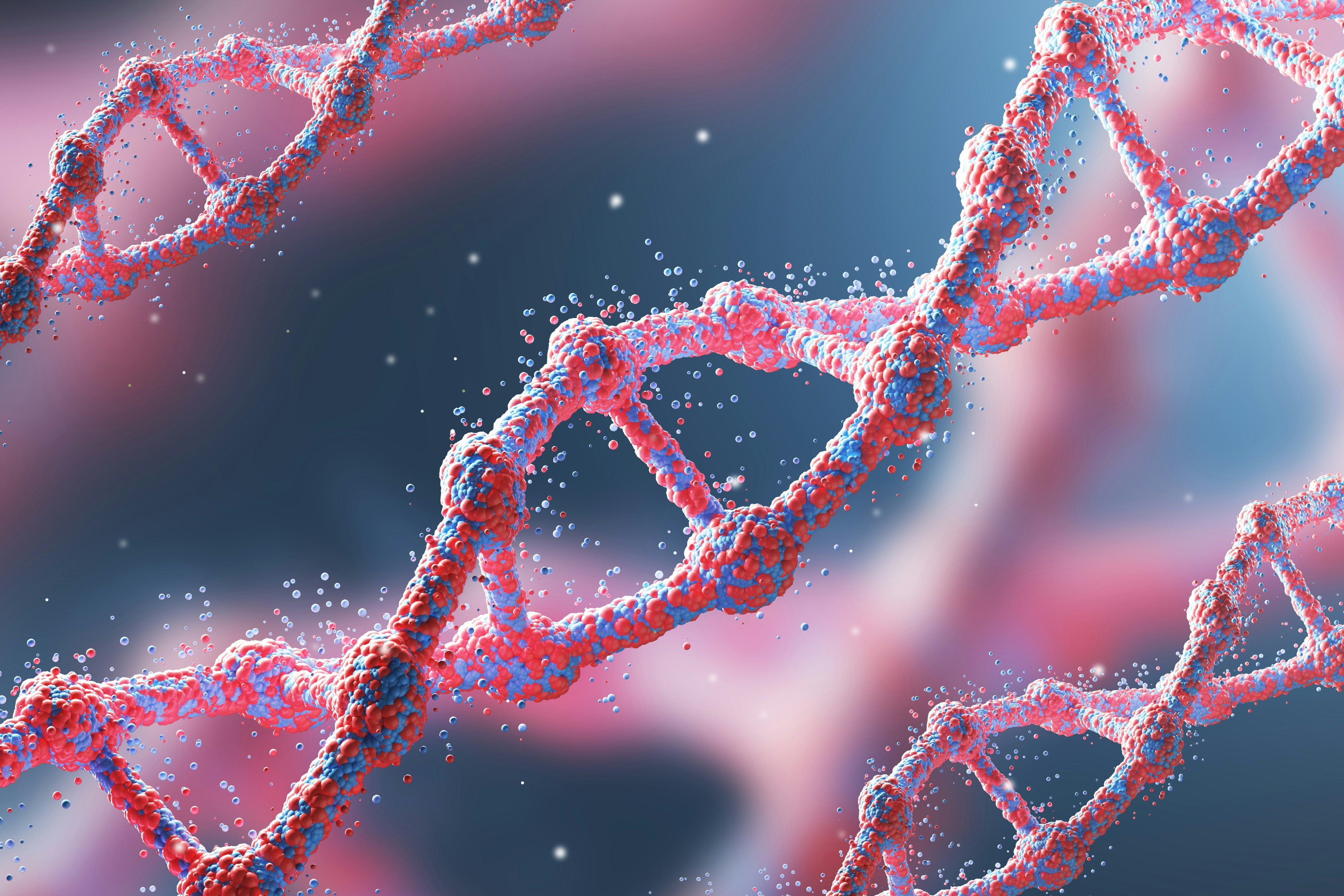
Professor Chloe Briggs didn’t plan on destroying everything. All she wanted was to take advantage of her dual PhD in biology and computer science to build something both fascinating and truly useful.
Maybe a small part of her wanted to see what could happen, too, because curiosity relentlessly roams in a scientist’s mind.
“Whatcha doin’, Chloe?” Alvin Toller asked as he strode into her computer lab. His crisply ironed white lab coat draped around his knees, and an 18-karat gold atomic symbol pin on his lapel reflected the bright overhead LED light. Alvin had also earned two PhDs in chemistry and medieval religion.
“I’m engineering a computer virus,” she replied as she keyed code in on her Dell 8000 laptop. The key tapping rhythm reminded Alvin of jazz.
“Um, isn’t that something first-year computer science students can do? Or even eighth graders? What’s so special about a computer virus?”
Chloe spun one-hundred-eighty degrees on her swivel chair, creating a breeze that ruffled Alvin’s wispy, blonde hair. “Nothing. It’s what I’m going to combine the computer virus with that makes it special.”
“And that is?”
Chloe stood, took Alvin’s hand, and said, “Come with me to my bio lab.”
Alvin, who had been trying to generate the nerve to ask the beautiful, thirty-three-year-old scientist out on a date or even just for a coffee after work, forgot to breathe.
She’s holding my hand!
Chloe escorted Alvin to her lab next door, where she released Alvin’s now-sweaty hand and sat on a stool in front of a van-sized biocontainment lab. A sign atop read, WARNING: BSL-2 CONTAINMENT.
“BSL-2. Hmm,” Alvin mused.
A glass wall separated them from the biolab. A two-door, interlocking security vestibule bracketed the left side, and a five-centimeter-square, two-window opening—currently shut—stood in the middle.
“Yeah, just Herpes simplex, influenza, stuff like that. Nothing to worry about,” she told him.
“I see. Now what?” The sweat that had covered Alvin’s hand froze into a sheen of ice.
Chloe retrieved a green circuit board the size of a pack of cards with three USB ports and multiple electronic components soldered onto it. “A modified Raspberry Pi. You can do a lot with this: create a gaming console, build a seismograph, and deploy a server, but I have something special in mind, something different. I have added code to the unit in a novel emitter I built that will bridge the gap between organic and inorganic matter. The emitter functions as a small-scale quantum computer. It’s really rather miraculous.”
She unlatched the biocontainment lab’s small window and opened both sides. A woosh flew into the containment room, propelled by a difference in air pressure between the two spaces.
“Um, aren’t you not supposed to open a biocontainment space to the outside environment when there are live viruses inside?”
“It’s okay, Alvin. It’s just Herpes simplex and influenza. You have had your flu shot, haven’t you?”
“Yeah, but Herpes—”
“You’ll be okay.” She playfully jabbed his side with her elbow. “What’s science without a little risk, a little adventure?” She narrowed her eyes and in seriousness, added, “It’s worth the risk.” Chloe attached a nine-volt battery to the Raspberry Pi and held it up to offer Alvin a closer look. “It’s energized now.”
“I still don’t know what you’re planning.”
“I was only joking about Herpes.” She retrieved her Pixel 11 phone from her lab coat and showed him three-dimensional images of molecules and viruses floating and flowing on the two-dimensional screen in a dance orchestrated by a conductor made of math. “I engineered a new virus that combines the T4 bacteriophage and Hepatitis B—”
“Hepatitis B! Maybe I’d prefer Herpes after all.”
“Relax. It’s a modified strain of Hep B that doesn’t do anything worse than give its victims a mild headache.” She blew her bangs back and adjusted her black plastic glasses. “I promise.”
“You know this how?”
“What I wanted was a super-fast reproducing virus to combine with the computer code, which is also fast-replicating, and that’s this T4-Hepatitis B hybrid.”
“To what end?”
“That’s what we’re going to see: the first combined biological and computer virus. Who knows what will happen, but I hope you’re as excited as I am.” She pressed her side against his. “And you know what?”
“What?”
“I wanted you here with me at this historic moment. Just the two of us.” She made eye contact and held it for several beats.
Alvin blushed as hot blood cascaded through his entire body. His nose caught a whiff of her luxuriously rose-scented perfume, giving him more shivers. “How does this work? I mean, how can you possibly combine computer code with living things?”
“Hmm. Is a virus living or not? It doesn’t matter because the Raspberry Pi will inject binary code inside the virus’s DNA, altering it on a sub-genetic level. As far as the actual connection goes, merely dropping this powered Raspberry Pi into the biocontainment unit will spark the transformation through the quantum code.” She paused for dramatic effect. “Ready to witness history?”
Alvin took a deep breath and grasped Chloe’s free hand. He smiled when she didn’t shake away his hand. “Yes.”
The Raspberry Pi thunked onto the bottom of the containment unit, where it sat motionless for over a minute, becoming darker and darker and then nearly invisible as it sucked in all the light. It then beeped twice and rose several inches off the tank’s floor as if lifted by invisible drones. A thin, blue aura surrounded the device, which was growing in size as it hummed loudly. An iridescent blue light filled the entire chamber, and the circuit board turned as white as fresh snow.
The light streamed over Chloe and Alvin, causing them to cast sharp shadows that twisted and bent like folding origami cranes.
In the blink of an eye, throughout the biocontainment unit, dozens of impossible creatures burst into view—each with an icosahedral head perched atop a segmented body, eight sword-like spikes crowning their heads, and six spidery legs clicking against the floor. These entities—viruses about the size of guinea pigs—surrounded the Raspberry Pi and seemed to bow. Their icosahedron heads then exploded, flinging white strands flying everywhere.
Alvin lurched backward.
“That’s the DNA,” Chloe said. She clapped her hands. “Wow, wow, wow!”
The circuit board buzzed and flashed yellow; the viruses’ DNA flew toward it, a parade of ribbons in the thrall of an irresistibly powerful force.
“My god, it’s happening! My new virus is merging with the computer virus.” She turned and hugged Alvin hard, then stepped back and high-fived him.
“What happens now?” Alvin looked back to the biocontainment space and then at Chloe.
The room spun as if it were an out-of-control merry-go-round. Faster and faster it went until Chloe and Alvin could no longer stand. They grabbed hold of table legs, but that didn’t stop them from floating up, their bodies parallel with the floor. Alvin and Chloe tightened their grips on the table legs as the table slid across the floor.
Alvin’s shoes flew off and into the wall.
Chloe’s glasses snapped off her face.
Green, red, blue, and yellow dots flashed on and off in the air around them, popping as they winked. Rings, like those of Saturn, swirled around the dots.
The biocontainment’s alarm blared, then shut off, then blared again at ten times the volume before playing Judy Garland’s “Somewhere Over the Rainbow.”
A little girl wearing a yellow dress with blue stripes materialized beneath Chloe, who gasped. “That’s me. Oh my god, that was me when I was six. I remember that birthday dress.”
Alvin gasped, too, when an old man wearing a beige shirt, shorts, and overalls floated above him.
“Is that future you?”
“No, that’s my great-grandfather. My parents kept his picture on the living room table. He was a farmer in the Old West.”
The lab’s ceiling vanished, along with the eleven stories above them. A hollow wind screamed around them. Stars shone brightly through the roofless room, even though it was midday, and as more and more stars winked in, the sun dimmed. The stars flickered like disco lights. Then the stars dimmed, too.
“What is it?” Alvin asked. He bit off a fingernail and chewed it.
“It’s over, I think.” Her face turned white and her pupils contracted into pinpricks.
“What’s over?”
“Everything. The combined living and computer virus has infected the quantum level, instantaneously infecting the entire universe. I didn’t consider that likely. I mean, yes, contaminating the quantum stratum was always theoretically possible when combining inorganic and organic viruses through a higher-level algorithm, but it shouldn’t have—”
And then everything ended.
If you enjoyed this story, I think you’ll also like What Hath God Wrought?
What Hath God Wrought?

Andrea Levy never expected her time machine to work. The twelfth-grader, desperate for something—anything—to stave off an F on her science project, cobbled together a hodgepodge of wires, old-style vacuum tubes, car batteries, rotary phone parts, metal and glass screw-in fuses, bits from an old Apple computer, a Seiko wall clock, and other a…
If you appreciate my short stories, but a subscription doesn’t fit your budget, you can buy me a coffee instead. Thank you.
This feels incredibly relevant (and scary) as to how casually AI companies are experimenting with all of our futures. Well done.
Just because we can doesn't mean we should