
The New Pilot
A short story

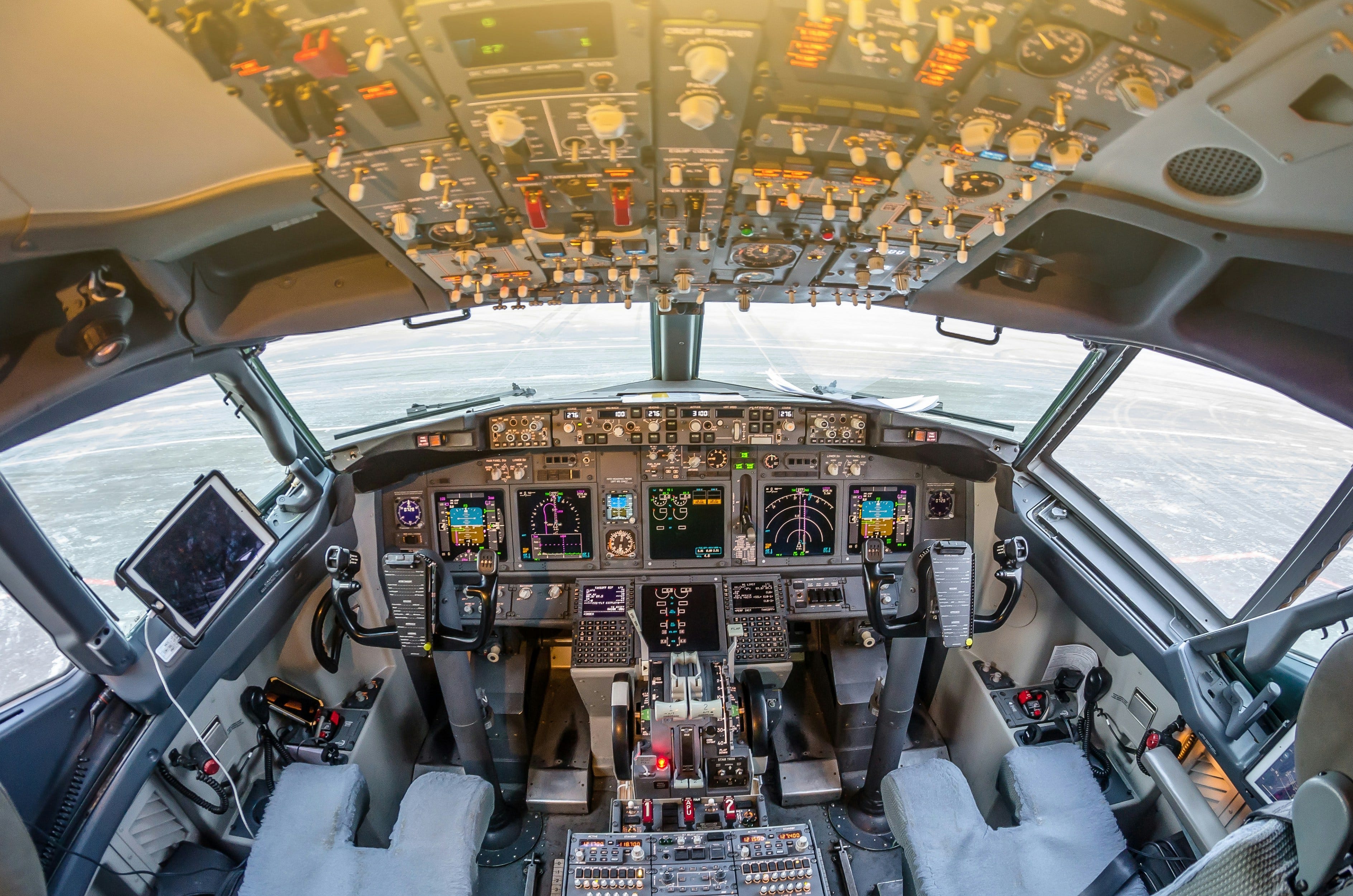
When Air Fresca’s public address intercom rang its banal, melodic tone, none of the passengers could anticipate the six words that followed, delivered in a breathless, staccato voice by flight 2022’s lead flight attendant:
“Is there a pilot on board?”
But Frank Cisco, a thirty-one-year-old stockbroker with thick, blond hair and a body that made him look more like a linebacker than a desk jockey, had been waiting for those words ever since he got his private pilot’s license six weeks ago.
He glanced at his wife, Millie, who nodded and said, “Go.”
Frank strode quickly to the front of the plane. Only when he reached the cockpit did he realize he’d been holding his breath the entire time. “I’m Frank; I’m a pilot,” he said to Annie, a mid-forties woman with short-cropped brunette hair whose crisp, blue uniform framed a face etched with grave concern.
“What kind of pilot are you?”
He straightened his back. “I fly a Cessna 172.”
“That’s a single-engine, propeller plane. The plane’s in trouble, and this is a jet engine Boeing 737, a vastly different and far more complicated aircraft. Do you think you can—?”
“You called me.” Frank pivoted three hundred sixty degrees. “I don’t see any other volunteers. I’m here and I can fly, and the good news is that all airplanes, no matter how advanced or powerful, fly the same way. So why don’t you tell me what happened and let’s get started doing whatever needs to be done?”
Frank glanced out the window. Mountains approached on the right, meaning they were near Denver on their way to LaGuardia. There were plenty of airports between here and New York with many very long runways to choose from. But he was getting ahead of himself.
“Yes,” Annie said. “Come with me.” She unlocked the cockpit door with her PIN and herded him inside.
Both pilots slumped back in their seats, dead.
“Captain Harris asked me to come into the cockpit, and less than a minute later, when I entered, I found them like this. I don’t know what happened.” She shook her head. “I tried to revive them, even going as far as to pour ice water on their heads, but they’re gone, deceased. We need a pilot to land the plane, and it looks like that’s going to be you.”
Frank scrutinized the burn marks on their hands and noted their vacant, glassy eyes.
Electrocution? That’s not possible.
He pressed his fingers against the pilot’s carotid artery and then did the same with the copilot.
Both pilots, how can that be?
“I checked their pulses, too. They’re gone.” Her hands shook and her lips quivered. “You can do this? You said you can.”
“I can.” Frank did not know if he could, but he knew he was the only hope for the one hundred or so passengers and crew.
They hoisted the pilot and co-pilot from their seats and laid them at the back of the cockpit.
Annie relocked the cockpit door and slowly lowered herself into the copilot’s seat, like she was wading into cold, shark-infested ocean water.
Frank was already in the left seat. He spoke into the microphone. “Mayday, mayday, mayday, this is Air Fresca flight 2022 declaring an emergency. The pilot and copilot are dead. I am Frank Cisco, a private pilot requesting assistance.”
No reply.
Frank tried again. He then changed the radio to 121.5, the emergency frequency, and repeated his mayday call.
No answer.
Weird, Frank thought. Why isn’t the radio working?
They were alone in the sky above the Rocky Mountains.
“What do we do now?” Annie’s words cracked.
“I land the plane.”
“Where, how?”
“First things first: I need to download the flight manual to my phone. Is the wifi still on?”
“Yes, but there’s a flight manual right here.” She pointed to the shelf of paper manuals near the copilot’s seat.
“It’s easier and faster for me to find what I need on my phone. I’m used to reading flight manuals this way and I want to follow the procedures that I know as much as possible.”
“Okay.” Annie neither sounded nor looked okay. Her hands trembled, goosebumps sprouted all over her neck and arms, and her heartbeat echoed against the cockpit walls.
Flight 2022, at an altitude of 33,000 feet, flew east at 530 miles per hour.
Frank scanned the instruments, most of which were familiar to him. Everything registered normally. Autopilot controlled the jet. For now.
In a short while, a pilot with no experience flying jets would be landing one of the most advanced aircraft in the world.
Sweat pooled under Frank’s arms.
Frank connected to the plane’s wifi and, to his surprise, a page opened containing the flight operating manual. He hadn’t navigated to that site; he hadn’t searched for it. It just popped open.
He downloaded the manual, which was divided into two sections: “Flight Operations” and “Post Flight Operations.” The Post Flight Operations’ file size dwarfed the Flight Operations file.
He studied his phone silently for ten minutes.
Annie didn’t speak either.
He then said, “I know what to do. It’s not hard. It’s not easy, either, to be honest about this, but I have the skills and now the knowledge to land this 737.”
But do I?
Frank puzzled over the manual, wondering if it was correct, because it didn’t make sense to him. And yet, neither did learning that one needed more power to fly slowly than to fly at speed, one of the several seemingly contradictory lessons of learning to pilot an airplane.
Frank twisted dials, pushed buttons, and pressed and pulled levers as he spoke the instructions aloud. Heading 281 degrees, increase altitude to 49,000 feet—could the plane even reach that altitude? Frank wondered—airspeed 170 knots—that’s cutting it close to a stall—cruise twenty minutes and then…
“Where are we heading?” Annie asked.
“Chicago. There are multiple long runways we can land on. That’s what the manual says: Chicago.”
“How does the manual know where we are so it can choose Chicago?”
Frank kept his eyes on the controls as he replied, “Look, I have to focus, so the less chatting the better. I’ve already surmised that this is some kind of smart flight manual that was auto downloaded to my phone for just this purpose: to land the airplane safely from our current location, which the system already knew.”
“Hey, sorry to distract you, Captain Frank, but I’m only trying to help.”
Frank rubbed his brow and turned Annie’s way. “Sorry, sorry. I’m a little stressed, and to be honest, some of these instructions don’t make a whole lot of sense to this humble propeller driver.” He instantly regretted his words. He didn’t want to make Annie more nervous than she already was.
The plane shuddered. A blaring cockpit alarm interrupted their conversation.
“The stall warning!” Annie shouted. “You have to increase the plane’s airspeed, or we’ll crash.”
“The manual said to do this.”
“The manual is wrong! I may not be a pilot, but I know that a stall is dangerous.”
The jet shook even more violently. Frank thought he heard screws loosen. Paper flew around the cockpit. A high-pitched whine stung his ears, a sudden acceleration threw him back against his seat, and his lungs refused to take in air. His vision grayed.
When he could see and breathe again, Frank tapped his phone as if nothing unusual had happened. “According to the manual, we’ll be flying like this for thirty seconds, which means that—”
The alarm ended. The plane stopped shaking. The air outside seemed still in comparison to what they’d just experienced.
“That part is over. We’re okay, we’re okay.”
“I’m afraid to ask, what’s the next part?”
“The next part is landing.”
“Landing? How can that be? Chicago’s over two hours from Denver, where we were a few minutes ago. That’s impossible.”
Seemingly random long and short beeps radiated from the cockpit’s overhead speaker.
“What’s that sound?” Annie asked, tensed vocal cords scratching her words.
Frank cocked his head so his ear aimed at the speaker. “It’s Morse Code. I recognize it, but I don’t know Morse and don’t understand it.”
“Why would there be a message in Morse code—?”
“Look!” Frank shouted. “Do you see it? O’Hare straight ahead!”
Annie shook her head. “I don’t see how that can be, but what do I know? I’m just a flight attendant. But tell me the important part, Frank: How do you land the plane?”
“Yes, it must be Chicago. Yeah. I mean, the manual has the information. I’ll just input the values into the auto-landing system and the aircraft will—”
“Frank?”
“Yes?”
“Would you look out the cockpit window, please, and tell me what you see?”
“I see…OMG. That’s not O’Hare. But it is. It’s just not—”
“It’s not finished. It’s incomplete. The tower’s not there. The terminal’s not there.”
“I don’t know. I don’t know. We’re aligned with the runway and that’s critical. We’ll land. We’ll figure out what happened later and we’re all safely on the ground. Okay?”
“Okay. You’re the captain.”
“Yeah.” Frank’s dream of piloting and rescuing a commercial aircraft was a nightmare. His bones ached.
Following the manual’s instructions, Frank set the auto brake to maximum. He held the throttle and yoke, lightly—don’t do the death grip, his instructor had admonished him over and over again—but that was pro forma because the computer was in control.
Three minutes later, the 737 screeched to a stop two thousand feet short of the runway’s end.
Frank and Annie sighed in unison.
For the first time since taking control of the plane, Frank spoke over the public address system. “Ladies and gentlemen, you are owed an explanation. As you can see, we’re safely on the ground. We’re in Chicago.”
I think we are.
Frank continued, “My name is Frank Cisco. The pilots are—incapacitated. I’m a private pilot and with the help of a flight attendant, Annie—”
“Martin.”
“Annie Martin, we landed the plane. I can’t tell you much else except that we’re safe and we’ll wait here until the authorities arrive. I don’t think we need to engage the evacuation slides. Ah, I see a truck with a ladder approaching. It shouldn’t be much longer. Thanks for your cooperation and please remain seated with your seatbelts fastened.”
Frank and Annie exited the cockpit and opened the main aircraft door, as a woman in her late thirties, wearing a khaki long-sleeve button-down shirt, wire-frame glasses, and a broad-brimmed stetson-style hat, reached the ladder’s top rung.
“Welcome to Douglas Field,” she said as she entered the aircraft. She wore the most neutral expression Frank had ever seen.
“This isn’t O’Hare?”
“O’Hare won’t be built until nineteen fifty-five. This is nineteen forty-nine.”
“What?” Frank blurted.
“It can’t be,” Annie added.
“Look around you. Look at those cars and those planes. Does this look like two thousand twenty-seven? It doesn’t because it’s not. You’ve traveled seventy-eight years back in time.”
“How is that possible? Why?”
“I haven’t introduced myself. I’m Chloe Bingham. I’m an engineer. I was sent back in time two years ago, but I traveled a different way, not like you, and I traveled solo, naked, because that was the only way then. I was given very specific instructions that I was to meet you and your plane here on this day at this hour.”
“I still don’t understand. Instructions from whom?
“An Artificial Intelligence in our time showed me how to build a time machine, but it could only transport one person and no inorganic matter. The AI sent me to prepare for your arrival.”
“Like The Terminator movie,” Annie interrupted.
“You have no idea how true your words are, but you will if you let me finish. AI needs to cannibalize your aircraft and use the data on your phone so I, with the help of other engineers in this era, can build nuclear power reactors. The hydraulics, avionics, metallurgy sample, even the wiring, and other parts from the 737 are critical to its plan.”
The Post Flight Operations manual, Frank realized. Instructions about how to construct a nuclear reactor.
“Why? For what purpose?”
Chloe wiped her eyes, sniffled, and then sobbed. When she composed herself a minute later, she continued. “The AI will kill my children in twenty twenty-seven if I don’t cooperate. Do you get it? I have to do what it wants. Marcie is seven, and Mallory is eleven. It could be an elevator that falls dozens of stories, a driverless car that hits them, a wrong medicine prescribed—probably something awful I can’t even imagine. I have to. I’m sorry.”
“Have to do what? I still don’t know what’s happening.”
“The instructions on your phone and your aircraft will be used to develop a commercial nuclear reactor in nineteen forty-nine, years before when civilian nuclear power would have begun, and far more advanced, too. This reactor and the ones built after it will provide unlimited energy so that when AI emerges in the mid-twenties, it will have all the energy it needs. That’s the limitation for AI in our time; data centers need far more power than is available. But that’s all going to change.”
“The AI killed the pilots. How? Why?”
“I didn’t know that would happen,” Annie snapped. “I don’t know how, either.” With difficulty, she swallowed a lump in her throat. “We’re all expendable.”
“How are you going to explain a Boeing 737 and all the passengers in nineteen forty-nine? This is going to draw attention like nothing before.”
“You’re thinking like somebody in twenty twenty-seven. There’s no social media now. Not even ten percent of Americans have televisions. Over the past year, I’ve amassed a fortune betting on sports events whose outcomes I already knew and through investments in the stock market. The reason you don’t see anyone else here is that I paid them not to be.” She lowered her voice as if her life force had suddenly drained away. “The AI told me how to do it all.”
“What happens when AI gets all the energy it needs?” Annie asked.
“Be glad you’re in nineteen forty-nine.”
If you appreciate my short stories, but a subscription doesn’t fit your budget, you can buy me a coffee instead. Thank you.
If you enjoyed this story, I think you’ll also like The Tunnel.

At least I know now when O'Hare was built...
This is good. Death to aay-eye!